
Pain that lingers
A toothache that keeps you up, or hot/cold sensitivity that hangs on after the trigger is gone.
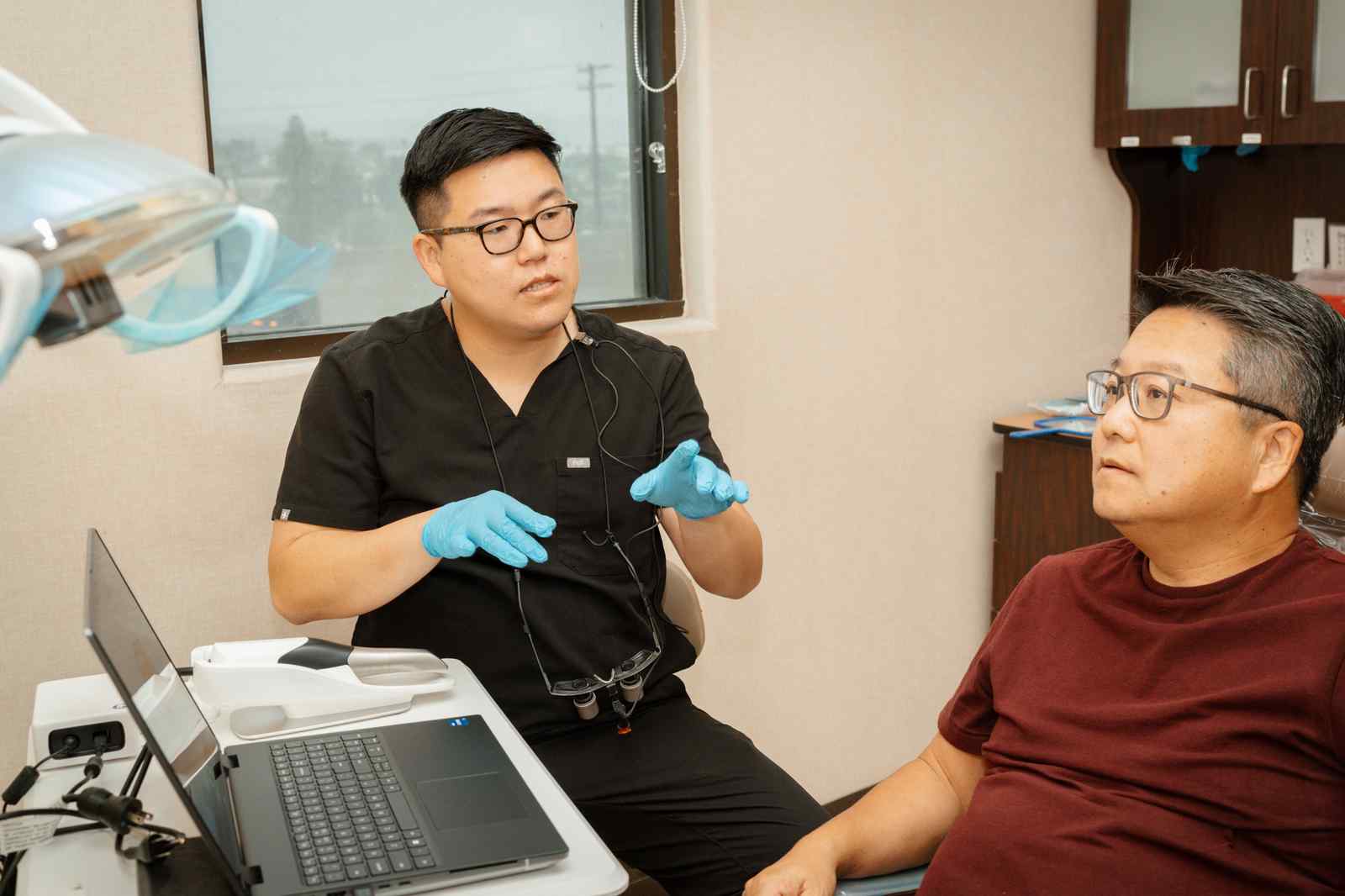
A root canal is done to remove the infected tissue behind the ache — and Dr. Chon's first job is getting you out of pain. He examines the tooth, tells you plainly what it needs, and either treats it here or refers you to an endodontist for the root canal itself.
At In Line Dentistry in Diamond Bar, Dr. James Chon, DMD, examines the tooth here first and gets you out of pain. He performs root canals here when the tooth suits it and refers complex cases to an endodontist. The exam and X-rays are the same $95 flat visit, or $0 out of pocket with an active PPO plan.
Plan for 90 minutes. We check your benefits for free before you come in. Financing is available on approved credit through CareCredit, Affirm, Klarna, Afterpay, Sunbit, LendingClub, and Proceed Finance — how financing works.
A toothache that keeps you up, or hot/cold sensitivity that hangs on after the trigger is gone.
Sharp or deep pain under pressure often points to trouble in the nerve.
Gum swelling or a pimple-like bump near the tooth can signal infection — don't wait on this one.
A tooth turning gray after an old injury may need attention even without pain.

In a root canal, the infected tissue inside the tooth is removed and the canals are cleaned and sealed, usually over one to two visits; back teeth typically get a crown afterward for long-term strength. It starts with an exam here: Dr. Chon gets you out of pain, then either treats the tooth here or refers you to an endodontist for the root canal itself — you are always seen first.
Root canal costs vary by tooth, so there is no single published number. In pain right now? For a genuine emergency, the exam and X-rays can get you a diagnosis and a plan the same day. It is the same $95 flat visit, or $0 out of pocket with an active PPO plan — no insurance needed, and no separate emergency fee — and anything treated here is itemized in writing before it starts.
Same-day when possible — out of pain first, then the plan. No separate emergency fee.
Emergency careHow published prices and written itemized plans work here.
The pricing pageCareCredit, Affirm, Klarna, Afterpay, Sunbit, LendingClub, and Proceed Finance, on approved credit.
Financing optionsTreatment is covered for four years from completion. One condition: keep up with your routine recall visits.
Read the policy →"Dr James went thru every single treatment in detail and explained everything so clearly."
"Dr James is not only professional and very knowledgeable, his friendly demeanor kept me calm."
"Dr. James took the time to patiently and clearly answer every single one of [my] detailed questions."
At In Line Dentistry. Dr. Chon examines the tooth and gets you out of pain first; he performs root canals here when the tooth suits it and refers the more complex ones to an endodontist after the visit — you are always seen here first. For a genuine emergency, the exam and X-rays — the same $95 flat visit, or $0 out of pocket with an active PPO plan, with no separate emergency fee — can get you a diagnosis the same day, and anything treated here gets an itemized written price before it starts.
A root canal is done under local anesthetic, and its purpose is to remove the infected tissue behind the ache. At In Line, Dr. Chon's first job is getting you out of pain — and nitrous oxide is available if you're anxious.
Warning signs: a toothache that keeps you up at night, lingering sensitivity to hot or cold, pain when biting, a darkening tooth, or swelling in the gum. Only an exam and X-ray confirm it — if you're in pain now, call and we'll hold time for you.
Dr. Chon examines the tooth and takes X-rays, gets you out of pain, and tells you plainly what it needs. If it needs a root canal, he treats it here when the tooth suits it or refers you to an endodontist — most cases are referred. In the procedure itself, the infected tissue inside the tooth is removed and the canals are cleaned and sealed; most treated back teeth then need a crown for long-term strength.
It varies by tooth — front teeth usually have one canal; molars have several — so there is no single published number. For a genuine emergency, the exam and X-rays — the same $95 flat visit, or $0 out of pocket with an active PPO plan, with no separate emergency fee — can get you a diagnosis the same day. The root canal itself is either done here — with an itemized written price before it starts — or by the endodontist Dr. Chon refers you to, and he tells you which at the same visit.
Sometimes extraction is the right call, but keeping your natural tooth is usually better long-term — a pulled tooth eventually needs replacing. Dr. Chon walks you through both options and lets you decide.
Tooth pain rarely improves on its own. Book an exam — or call now and we'll work to see you quickly. Pick the first open time below, and call or text too.
Optional. It only changes the price you see.
Loading Dr. Chon's next openings…
Online times aren't available right now. Tell us who's coming and we'll text you a Tuesday or Thursday time.
You requested a Tuesday or Thursday time. This is a request, not a confirmed appointment. We'll text you to confirm it, usually the same business day.
20855 Golden Springs Dr #108, Diamond Bar, with free parking right outside. Need a different time? Call or text (909) 345-6155.
This is a request, not a confirmed appointment. We'll text you a Tuesday or Thursday time to confirm, usually the same business day.
20855 Golden Springs Dr #108, Diamond Bar, with free parking right outside.